
Trump Rattles Wind Industry
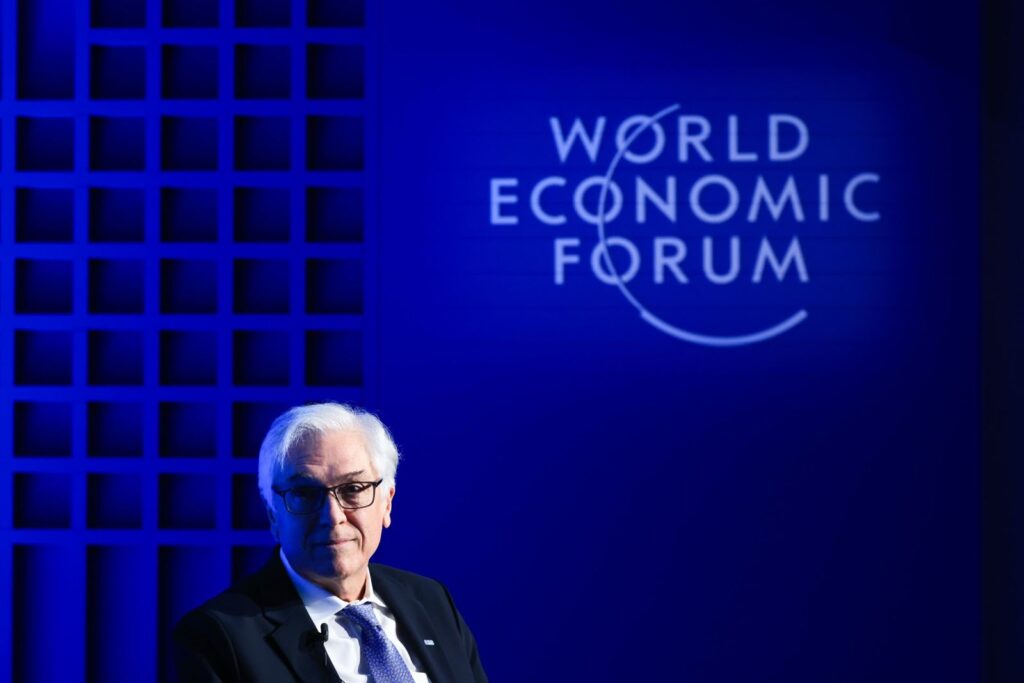
Al Gore Slams Trump’s Offshore Wind Pushback as Illogical at Davos
US President Donald Trump’s efforts to block offshore wind projects defy economic and technological logic, said Al Gore, chairman of Generation Investment Management and a former US vice president, as debates over the energy transition intensified at the World Economic Forum in Davos.
“Why are we ending the wind farms that are now being built on the coast of the United States?” billionaire financier David Rubenstein asked Gore during a public conversation at Bloomberg House on Wednesday.
“Because Trump is insane,” Gore replied, drawing laughter from the audience.
Gore said solar and wind power are now the cheapest sources of electricity globally and are rapidly becoming dominant as economies electrify. “Renewable is taking over,” he said, adding that governments have little practical choice but to continue the transition.
Trump’s administration has sought to halt offshore wind development, citing unspecified national security risks. While judges have recently allowed stalled projects in New York, Rhode Island and Virginia to resume construction, those rulings are temporary. The White House has vowed to continue its legal fight, leaving the fate of several large-scale projects uncertain.
Energy leaders at Davos offered a more nuanced view of the transition. Andrés Gluski, chief executive officer of US renewable power producer AES Corp., warned against politicizing energy choices.
“I find a lot of the thinking is politicized — either you’re 100% renewables or you’re against renewables,” Gluski said during an energy security panel. “This makes no sense whatsoever. With today’s technology, you have to combine the two.”
Fatih Birol, executive director of the International Energy Agency, reiterated the agency’s forecast that global electricity demand will grow three times faster than overall energy demand, driven by artificial intelligence, air conditioning and electric vehicles. Renewables, natural gas and nuclear power are expected to meet most of that demand, he said.
“Lots of supplies are coming,” Birol said. “But it won’t be forever.”
Meanwhile, lower oil prices may not benefit US producers as much as policymakers expect, according to Meghan O’Sullivan, a Harvard professor and former deputy national security adviser under President George W. Bush.
“A $53-a-barrel oil price is not consistent with high American oil production,” O’Sullivan said. “There’s a real tension there, and American companies feel that acutely.”
She added that the Trump administration’s growing use of foreign policy tools — including diplomacy and military force — to influence global energy markets could dampen long-term investment rather than support it.
Recommended Article
-
Climate Pressure Hits Banks
-
Trump Rattles Wind Industry
-
China breaks the Davos hush on climate
-
Trump’s latest blow to climate
-
Iran Protests Grow as Rial Plunges
-
EV Boom Slows as Subsidies Fade
-
‘Untouchable’ no longer
-
Blockbuster year
-
Another log on the fire
-
Hybrids pick up speed
-
It’s not all bad news
-
Under New Ownership
-
New front in the war on wind
-
Blown away
-
What the end of the F-150 means