
Blown away
India’s Energy Transition Faces a New Risk: Climate Volatility
Few investments appear as compelling as India’s energy transition. Power demand is set to grow faster than in any other major market next year, while the country races to meet Prime Minister Narendra Modi’s 2030 target to add massive volumes of renewable capacity—roughly double today’s total.
Yet climate change is injecting a new layer of risk, prompting investors and project developers to reassess assumptions that once underpinned wind and solar profitability. Rising temperatures are driving increasingly unpredictable weather patterns, threatening to disrupt power generation forecasts and long-term returns from large-scale renewable projects.
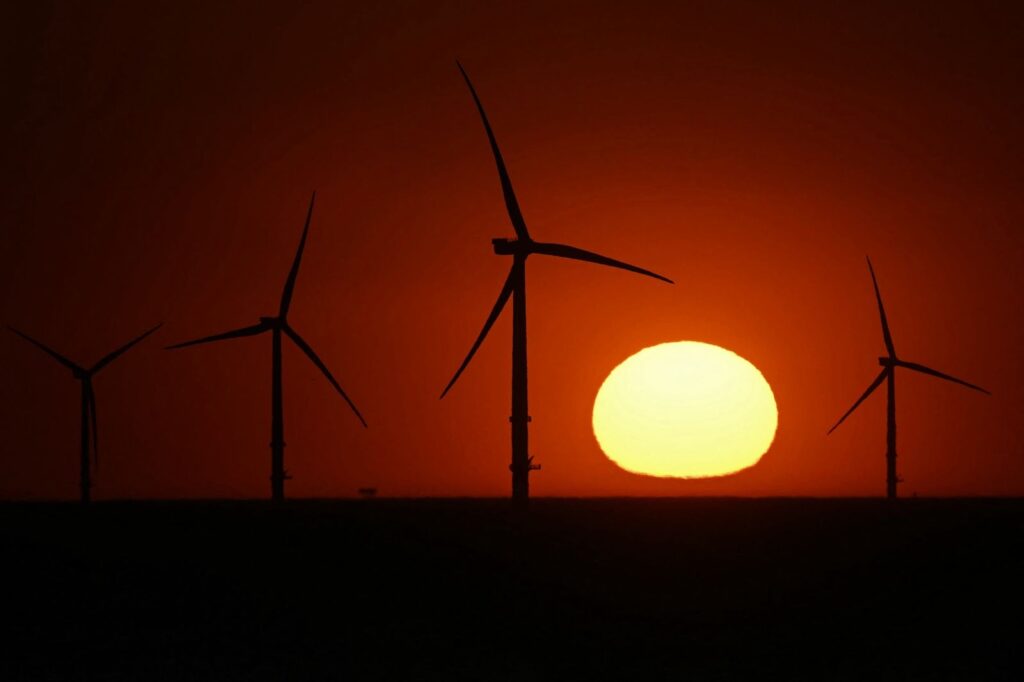
Eversource Capital, one of India’s largest climate-focused asset managers, has shifted its priorities toward solar power after exiting investments in wind-heavy electricity producers, citing concerns over weaker wind speeds.
“Wind projects have not delivered the performance we expected,” Chief Operating Officer Prasanna Desai said. Technological improvements have failed to fully offset the shortfall, and upgrades to larger turbines “have not produced the desired results,” he added.
The concern extends well beyond India. As renewables account for a growing share of global power generation—rising to nearly 32% last year from about 22% a decade earlier, according to UK-based energy think tank Ember—climate-driven variability is emerging as a systemic risk.
A Bloomberg Green analysis examined average wind speeds and solar radiation over rolling five-year periods between 2001 and September this year, using data from the Copernicus Climate Change Service. Compared with 30-year averages, wind speeds have declined most sharply since 2021 in India, western China and parts of Southeast Asia, including Indonesia, the Philippines and Malaysia. Solar radiation has also weakened over the same period across much of the Southern Hemisphere.
“Climate change is effectively redistributing energy resources,” said Roberta Boscolo, head of climate and energy at the World Meteorological Organization. “A small change in wind speed translates into a significant loss of energy.”
The shifting climate is pushing energy companies worldwide to factor weather risk more deeply into project planning and operations.
US-listed ReNew Energy Global Plc has expanded its forecasting capabilities by acquiring analytics firm Regent Climate Connect Knowledge Solutions Pvt. in 2020 and investing in an energy diagnostics center near New Delhi. Billionaire Gautam Adani’s clean-energy arm, Adani Green Energy Ltd., has integrated artificial intelligence into day-ahead weather forecasting to mitigate operational risks.
Energy Infrastructure Partners AG, which manages about €7.5 billion ($8.8 billion) in assets, has partnered with climate-risk specialists to develop tools that assess future wind-speed variability and temperature patterns for renewable assets, the firm said in its latest sustainability report.
“The industry needs to think carefully about where these assets are located,” Boscolo said. “It’s no longer enough to look at historical data. You have to look forward.”
Recommended Article
-
Climate Pressure Hits Banks
-
Trump Rattles Wind Industry
-
China breaks the Davos hush on climate
-
Trump’s latest blow to climate
-
Iran Protests Grow as Rial Plunges
-
EV Boom Slows as Subsidies Fade
-
‘Untouchable’ no longer
-
Blockbuster year
-
Another log on the fire
-
Hybrids pick up speed
-
It’s not all bad news
-
Under New Ownership
-
New front in the war on wind
-
Blown away
-
What the end of the F-150 means