stdvolt

admin

Climate Pressure Hits Banks

Climate Pressure Hits Banks January 22, 2026 admin Climate Risks Begin to Hit Borrowing Costs as Markets Price In Global Warming For years, climate experts have argued that markets would eventually force companies to take climate change more seriously as risks become clearer. New research suggests that shift is now underway, with borrowers starting to face tangible financial penalties for ignoring the dangers ahead. A paper published this month by the European Central Bank found that banks with the highest exposure to so-called transition risks are now paying significantly more to borrow in funding markets. That followed a December study by the Central Bank of Ireland showing that companies exposed to physical climate risks face higher borrowing costs and are increasingly required to post more collateral. Together, the findings suggest that the two main channels through which climate change is expected to affect corporate finances — transition risk and physical risk — are beginning to materialize in day-to-day financial pricing. “These papers illustrate well how the economics of the transition is working on a micro-, day-to-day level in the financial system,” said Ulf Erlandsson, chief executive officer of the Anthropocene Fixed Income Institute. Transition risk refers to the threat that companies slow to cut carbon-intensive activities will be penalized by regulators, investors or shifting consumer preferences. While long viewed as difficult to quantify — particularly as governments repeatedly delay net-zero policies — physical risks tied to extreme weather are becoming harder to dismiss as climate disasters mount. In the ECB study, senior economist Margherita Giuzio, alongside Bige Kahraman and Jasper Knyphausen of Oxford Saïd Business School, examined how banks’ exposure to carbon-intensive borrowers affects funding costs in Europe’s repo market. That market allows banks to manage short-term liquidity by selling and repurchasing high-quality assets, often overnight. By combining data on European banks’ repo borrowing between 2019 and 2022 with measures of their financed emissions — the carbon footprint of their lending — the researchers found a clear pricing effect. Banks with higher financed emissions consistently paid more to borrow. A one standard deviation increase in financed emissions translated into repo rates that were on average 7% to 12% higher. The findings “provide the first evidence that climate risks affect the pricing of bank liquidity in Europe’s core funding market,” the researchers wrote, adding that transition risks could amplify financial fragilities and interact with the transmission of monetary policy. “Banks are exposed to the economic conditions of the firms they lend to,” Giuzio said in an emailed response. “Shocks affecting those firms can influence their ability to repay loans. Transition risk, for example arising from changes in carbon pricing, regulation or consumer preferences, can affect firms’ costs and profitability, and therefore their credit risk.” Not all regulators agree that climate change threatens financial stability. The issue sparked tense debate at a meeting of the Financial Stability Board last year, where US officials argued that climate risk should only be monitored if there is evidence of an imminent threat to the financial system. Evidence of physical risk affecting borrowing costs is also mounting. Ireland’s Central Bank examined more than 40,000 corporate loans and found that companies located in flood-prone areas pay around 7 to 13 basis points more than peers elsewhere. Those firms are also more likely to back loans with collateral. The central bank warned that exposure to flood risk is expected to rise significantly as climate change alters weather patterns. A broader global picture emerges from recent research by Karol Kempa of the Frankfurt School of Finance & Management. Analyzing about 86,000 syndicated bank loans worldwide, the study found that firms in countries with higher climate vulnerability face meaningfully higher borrowing costs. A one standard deviation increase in climate vulnerability was associated with a 39 basis-point rise in loan pricing. “Climate-related events could cause substantial economic damages to firms,” Kempa wrote, adding that those shocks could be transmitted to the financial system through loan defaults, falling asset prices and, ultimately, threats to financial stability. Recommended Article Climate Pressure Hits Banks Trump Rattles Wind Industry China breaks the Davos hush on climate Trump’s latest blow to climate Iran Protests Grow as Rial Plunges EV Boom Slows as Subsidies Fade ‘Untouchable’ no longer Blockbuster year Another log on the fire Hybrids pick up speed It’s not all bad news Under New Ownership New front in the war on wind Blown away What the end of the F-150 means

Climate Pressure Hits Banks Read More »

Trump Rattles Wind Industry

Trump Rattles Wind Industry January 22, 2026 admin Al Gore Slams Trump’s Offshore Wind Pushback as Illogical at Davos US President Donald Trump’s efforts to block offshore wind projects defy economic and technological logic, said Al Gore, chairman of Generation Investment Management and a former US vice president, as debates over the energy transition intensified at the World Economic Forum in Davos. “Why are we ending the wind farms that are now being built on the coast of the United States?” billionaire financier David Rubenstein asked Gore during a public conversation at Bloomberg House on Wednesday. “Because Trump is insane,” Gore replied, drawing laughter from the audience. Gore said solar and wind power are now the cheapest sources of electricity globally and are rapidly becoming dominant as economies electrify. “Renewable is taking over,” he said, adding that governments have little practical choice but to continue the transition. Trump’s administration has sought to halt offshore wind development, citing unspecified national security risks. While judges have recently allowed stalled projects in New York, Rhode Island and Virginia to resume construction, those rulings are temporary. The White House has vowed to continue its legal fight, leaving the fate of several large-scale projects uncertain. Energy leaders at Davos offered a more nuanced view of the transition. Andrés Gluski, chief executive officer of US renewable power producer AES Corp., warned against politicizing energy choices. “I find a lot of the thinking is politicized — either you’re 100% renewables or you’re against renewables,” Gluski said during an energy security panel. “This makes no sense whatsoever. With today’s technology, you have to combine the two.” Fatih Birol, executive director of the International Energy Agency, reiterated the agency’s forecast that global electricity demand will grow three times faster than overall energy demand, driven by artificial intelligence, air conditioning and electric vehicles. Renewables, natural gas and nuclear power are expected to meet most of that demand, he said. “Lots of supplies are coming,” Birol said. “But it won’t be forever.” Meanwhile, lower oil prices may not benefit US producers as much as policymakers expect, according to Meghan O’Sullivan, a Harvard professor and former deputy national security adviser under President George W. Bush. “A $53-a-barrel oil price is not consistent with high American oil production,” O’Sullivan said. “There’s a real tension there, and American companies feel that acutely.” She added that the Trump administration’s growing use of foreign policy tools — including diplomacy and military force — to influence global energy markets could dampen long-term investment rather than support it. Recommended Article Trump Rattles Wind Industry China breaks the Davos hush on climate Trump’s latest blow to climate Iran Protests Grow as Rial Plunges EV Boom Slows as Subsidies Fade ‘Untouchable’ no longer Blockbuster year Another log on the fire Hybrids pick up speed It’s not all bad news Under New Ownership New front in the war on wind Blown away What the end of the F-150 means walking away from coal

Trump Rattles Wind Industry Read More »

China breaks the Davos hush on climate

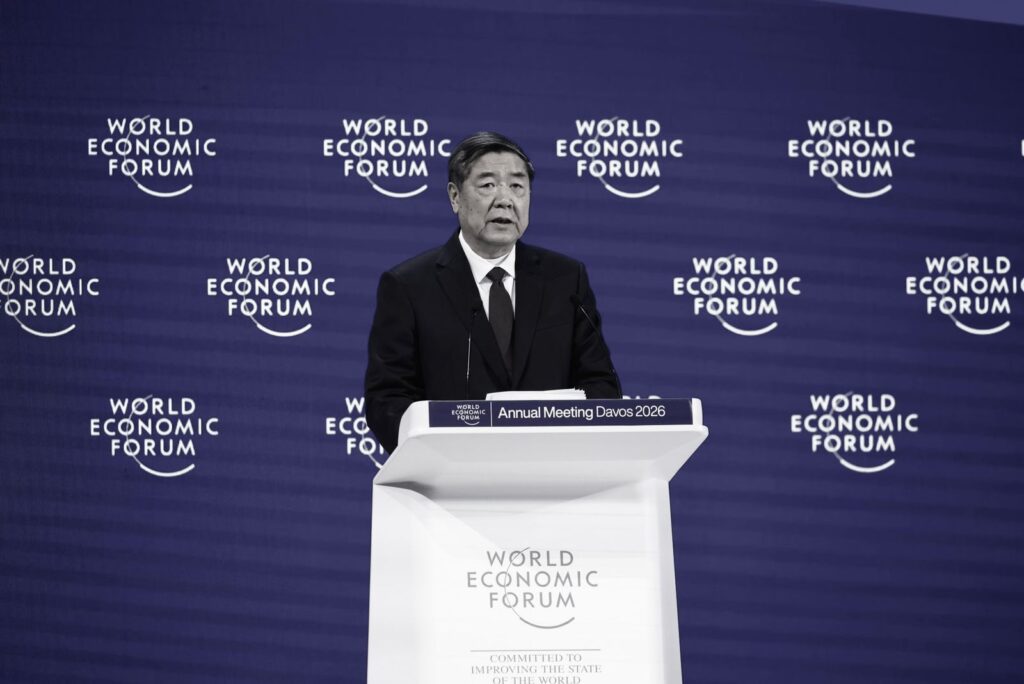
China breaks the Davos hush on climate January 22, 2026 admin China Promotes Green Leadership at Davos as Trump Returns to Global Stage Since President Donald Trump’s first election, Chinese leaders have repeatedly used the backdrop of Switzerland’s snow-capped mountains and retreating glaciers to present a global vision centered on green development a sharp contrast to the US leader’s long-standing climate skepticism. That contrast is set to sharpen further as Trump arrives in Davos on Wednesday, where he is expected to deliver a major speech at the World Economic Forum. The gathering has already been noticeably subdued on climate issues this year. Chinese Vice Premier He Lifeng used his address on Tuesday to reinforce Beijing’s green credentials, urging global cooperation with China and its clean-technology exporters to accelerate efforts to curb emissions. “We invite enterprises from all over the world to embrace the opportunities from the green and low-carbon transition, and work closely with China in such areas as green infrastructure, green energy, green minerals and green finance,” He said. He, who has led trade negotiations with Washington over the past year, also sought to preempt growing global concerns over China’s record trade surplus, particularly in green technologies such as solar panels, batteries, and electric vehicles. “China will pursue green development and share with the world the opportunities,” he said. Over the past year, Beijing has taken steps to ease tensions and push back against a wave of trade barriers targeting its green exports. Measures include lowering tax rebates for solar and battery shipments, negotiating minimum price thresholds for EV sales to the European Union, and shifting more green manufacturing capacity overseas. China’s upcoming five-year plan will continue to prioritize green development, reflecting the rising contribution of its solar, battery, and electric vehicle sectors to economic growth, especially as the country grapples with a prolonged downturn in real estate, He said. Despite being the world’s largest greenhouse-gas emitter, China is showing “firm resolve and maximum effort” to meet President Xi Jinping’s first-ever pledge to reduce the country’s absolute emissions, according to the vice premier. Recommended Article China breaks the Davos hush on climate Trump’s latest blow to climate Iran Protests Grow as Rial Plunges EV Boom Slows as Subsidies Fade ‘Untouchable’ no longer Blockbuster year Another log on the fire Hybrids pick up speed It’s not all bad news Under New Ownership New front in the war on wind Blown away What the end of the F-150 means walking away from coal The Rising Global Energy Demand

China breaks the Davos hush on climate Read More »

Trump’s latest blow to climate

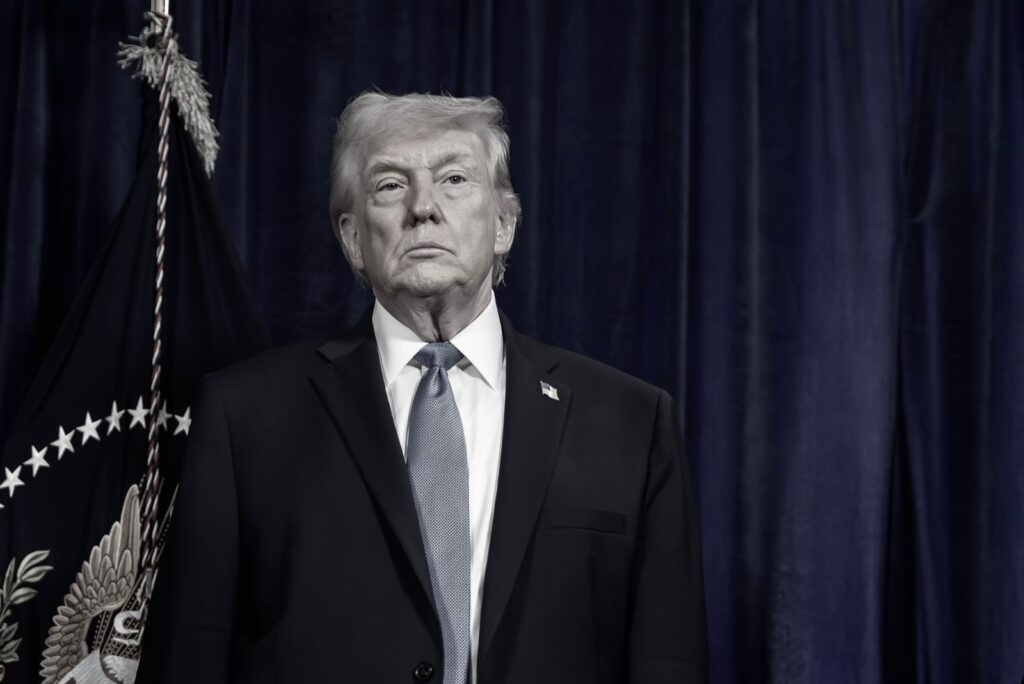
Trump’s latest blow to climate January 8, 2026 admin Trump Signals US Exit From Key Global Climate Bodies, Deepening Retreat From Climate Cooperation   President Donald Trump has expanded the US retreat from global climate cooperation by signaling withdrawals from major international organizations, including the United Nations and leading scientific bodies focused on climate change. Among the 66 organizations the US plans to leave are the Intergovernmental Panel on Climate Change (IPCC) and the United Nations Framework Convention on Climate Change (UNFCCC), according to people familiar with the decision. The move is expected to sharply reduce Washington’s role in global efforts to curb greenhouse-gas emissions and significantly weaken the influence of those institutions. The decision aligns with Trump’s broader domestic agenda to roll back environmental regulations and boost fossil-fuel production. It follows his January 2025 order initiating the one-year process to withdraw the US from the Paris Agreement, the landmark 2015 accord aimed at limiting global warming — a step he also took during his first term. “This is a gift to China and a free pass for countries and polluters that want to avoid accountability,” said John Kerry, the former US secretary of state and climate envoy under President Joe Biden. “It’s a self-inflicted wound on the global stage.” A spokesperson for the UNFCCC did not immediately respond to requests for comment. Trump’s second term has accelerated efforts to dismantle climate-related policies he has repeatedly dismissed as a “hoax.” Funding programs and tax incentives introduced under Biden — including support for clean energy and electric vehicles — have been scrapped. Renewable-energy projects have been halted, research grants frozen or canceled, and public access to certain climate datasets restricted. The administration is dismantling agencies deemed “overreaching, mismanaged, unnecessary, wasteful and poorly run,” while advancing policies it says better align with US interests, Secretary of State Marco Rubio said in a statement. A formal withdrawal from the UNFCCC would pull the US out of the UN body that coordinates global emissions targets and organizes the annual COP climate summits. US officials were notably absent from last year’s talks in Brazil. The decision by the world’s largest economy and second-biggest emitter is “deeply regrettable and inappropriate,” said Wopke Hoekstra, the European Union’s climate commissioner. “We will continue to support international climate science without hesitation, as the foundation of our work.” The move represents “the most serious challenge to international climate efforts since the Paris Agreement was adopted,” said Li Shuo, director of the China Climate Hub at the Asia Society Policy Institute. “For China, it means one less competitor in the clean-technology race.” “America is standing alone on climate,” said Carsten Schneider, Germany’s environment minister, adding that other countries remain committed to limiting global warming to 1.5 degrees Celsius this century. By exiting the UNFCCC, future US administrations may face a more complicated path to rejoining global climate efforts. In 2021, Biden moved swiftly to re-enter the Paris Agreement immediately after taking office. With assistance from Lili Pike, Eric Roston, Petra Sorge, John Ainger and Laura Millan. Recommended Article Trump’s latest blow to climate Iran Protests Grow as Rial Plunges EV Boom Slows as Subsidies Fade ‘Untouchable’ no longer Blockbuster year Another log on the fire Hybrids pick up speed It’s not all bad news Under New Ownership New front in the war on wind Blown away What the end of the F-150 means walking away from coal The Rising Global Energy Demand

Trump’s latest blow to climate Read More »

Iran Protests Grow as Rial Plunges

Iran Protests Grow as Rial Plunges January 7, 2026 admin Iran’s Leaders Struggle to Contain Tenth Day of Protests as Currency Plunges Iran’s leadership faces mounting challenges quelling protests that have entered a tenth consecutive day, driven by a deepening economic crisis and a sharp collapse in the value of the rial. Demonstrations, which began in late December after the currency hit record lows, have spread to at least 27 of Iran’s 31 provinces, with merchants, workers and students taking to the streets in Tehran and other cities, according to human rights monitors. The Human Rights Activists News Agency reported at least 36 people have been killed and more than 2,000 arrested during clashes with security forces. The government has attempted a range of responses — from modest cash handouts and promises of increased subsidies to tear gas and heavy crackdowns — but none have succeeded in calming public anger. Analysts say partial economic measures are unlikely to satisfy protesters who have lost confidence in the Islamic Republic’s ability to tackle inflation and systemic mismanagement, especially amid ongoing U.S. pressure. Iran’s political structure, a blend of elected officials and overarching theological authority vested in Supreme Leader Ayatollah Ali Khamenei, has long been brittle in the face of sustained social unrest. The protests have taken on broader political tones, with chants against clerical rule amplifying frustration beyond purely economic grievances. International dynamics are also casting a shadow over Tehran’s response. Officials must navigate the unrest under the specter of potential U.S. intervention after President Donald Trump warned that Washington could support protesters should security forces violently suppress peaceful demonstrations. Tehran has repeatedly accused foreign powers of fomenting unrest, while rights groups warn that the death toll and number of detentions could rise without a clear political solution. Without an apparent path to bridge the divide between the state and its citizens, analysts say the unrest could deepen, underscoring the twin pressures of a collapsing currency and widespread public discontent in the Islamic Republic. Recommended Article Iran Protests Grow as Rial Plunges EV Boom Slows as Subsidies Fade ‘Untouchable’ no longer Blockbuster year Another log on the fire Hybrids pick up speed It’s not all bad news Under New Ownership New front in the war on wind Blown away What the end of the F-150 means walking away from coal The Rising Global Energy Demand

Iran Protests Grow as Rial Plunges Read More »

EV Boom Slows as Subsidies Fade

EV Boom Slows as Subsidies Fade January 7, 2026 admin Global EV Sales Growth Set to Slow as Subsidies Fade and Policy Support Weakens Global sales growth of electric vehicles is expected to slow this year as China scales back subsidies, Europe wavers on its internal combustion engine phaseout, and automakers and policymakers in the US retreat from the segment. BloombergNEF estimates global passenger EV sales will reach 24.3 million units this year, an increase of just 12% from 2025, sharply down from the 23% growth recorded last year. In the US, the electric-vehicle industry is facing what analysts describe as an “EV winter.” Manufacturers must endure a difficult period before a potential rebound in 2027 and 2028, said Nathan Niese, global lead for EVs and energy storage at Boston Consulting Group. While the long-term outlook for battery-powered vehicles remains positive, he said there is little in 2026 to materially lift market optimism. Those challenges are underscored by Ford Motor Co.’s decision in December to take a $19.5 billion charge tied to a major overhaul of its EV business. The move includes plans to rework its flagship F-150 Lightning into an extended-range hybrid, marking one of several strategic reversals by major automakers outside China. The US market has come under additional pressure after the Trump administration withdrew consumer tax credits of up to $7,500 at the end of September and loosened fuel-efficiency standards. BloombergNEF said US EV sales plunged 41% year-on-year in December. Even in China, the world’s largest EV market, growth is expected to cool. Beijing has halved EV tax incentives for 2026 and tightened its “cash-for-clunkers” program. Authorities have also criticized what they describe as excessively aggressive price competition and moved to curb deep discounting used by manufacturers to sustain volumes. “The Chinese government is clearly trying to ease the price war,” said Michael Dunne, CEO of consultancy Dunne Insights. Intensifying competition has pushed BYD Co. to its weakest annual sales growth since 2020, as rivals such as Geely Automobile Holdings Ltd. and Xiaomi Corp. gain market share. Automakers are also encountering slower growth as they expand into smaller cities and rural areas. Bloomberg Intelligence estimates passenger EV sales in China — including plug-in hybrids and extended-range hybrids — reached 15.6 million units in 2025, up 27% from the previous year. Growth in 2026 is projected to slow to 13%. Despite the deterioration in policy support, the sector’s underlying economics are improving. Battery prices — the most expensive component of an EV — fell another 8% in 2025, according to BloombergNEF, helping to improve affordability. “Automakers that can cut costs and offer affordable models in the most in-demand vehicle segments are likely to sustain sales growth,” said Huiling Zhou, an analyst at BloombergNEF. Recommended Article EV Boom Slows as Subsidies Fade ‘Untouchable’ no longer Blockbuster year Another log on the fire Hybrids pick up speed It’s not all bad news Under New Ownership New front in the war on wind Blown away What the end of the F-150 means walking away from coal The Rising Global Energy Demand

EV Boom Slows as Subsidies Fade Read More »

‘Untouchable’ no longer

‘Untouchable’ no longer December 31, 2025 admin Investors Embrace Wildfire Cat Bonds as Modeling Improves and Losses Mount Alternative investment managers are increasingly turning to catastrophe bonds linked to wildfires, stepping into a risk segment that until recently was considered too complex — and too volatile — to price reliably. Insurers sold more than $5 billion of catastrophe bonds with some exposure to wildfire risk this year, more than double the level seen in 2024, according to data from Artemis, a specialist tracker of insurance-linked securities. In previous years, issuance was limited to sporadic deals worth only tens of millions of dollars. While still a niche segment, wildfire-linked bonds helped propel overall catastrophe bond issuance to a record $23 billion increase in 2025, putting the total market on track to reach about $60 billion by year-end, Artemis said. The growing appetite reflects improvements in wildfire risk modeling, which have made the asset class more accessible to institutional investors. Acrisure Re, a reinsurance broker, said better analytics have encouraged fund managers to enter what was once viewed as an “untouchable” risk category. “The modeling has improved to the point where investors are more comfortable isolating wildfire risk,” said Dirk Schmelzer, senior fund manager at Plenum Investments AG. The trend could signal a broader shift in how catastrophe bonds are structured, he added, as insurers increasingly rely on capital markets to absorb climate-related losses. “Historically, wildfire exposure was bundled together with earthquake and hurricane risk,” Schmelzer said. “Now it has become such a dominant peril that it makes sense to place it on a standalone basis.” Much of the momentum has been driven by conditions in California, where consecutive severe fire seasons have pushed traditional reinsurance costs sharply higher. Fires that swept through the Los Angeles area in January destroyed more than 16,000 buildings and resulted in a record $40 billion in insured losses. Those events were a key factor behind global insured losses from natural disasters exceeding $100 billion in 2025, the sixth consecutive year the threshold has been breached. Cat bond investors, however, were largely insulated. Fitch Ratings estimates that losses absorbed by catastrophe bond holders this year totaled less than $250 million, underscoring the appeal of the instruments as a way to transfer extreme risk away from insurers’ balance sheets. As climate-driven urban wildfires become more frequent and destructive, insurers, utilities and public entities are expected to lean more heavily on capital markets to manage exposure — potentially cementing wildfire catastrophe bonds as a permanent feature of the alternative investment landscape. Recommended Article ‘Untouchable’ no longer Blockbuster year Another log on the fire Hybrids pick up speed It’s not all bad news Under New Ownership New front in the war on wind Blown away What the end of the F-150 means walking away from coal The Rising Global Energy Demand

‘Untouchable’ no longer Read More »

Blockbuster year

Blockbuster year December 30, 2025 admin Green Assets Attract Record Inflows as AI Fuels Global Power Demand Investors are pouring money into climate-friendly assets this year, defying policy and regulatory rollbacks in the US and Europe, as artificial intelligence drives a surge in demand for energy infrastructure. Global issuance of green bonds and loans has reached a record $947 billion so far this year, according to data compiled by Bloomberg Intelligence. The inflows come as renewable-energy stock indexes head for their first annual gains since 2020, outperforming the S&P 500 by a wide margin, while shares of power-grid and energy-infrastructure companies remain firmly in favor. The resilience of green investment is striking given the political backdrop. US President Donald Trump has openly backed fossil fuels while dismantling clean-energy subsidies and climate legislation. In Europe, governments have softened some of the region’s most stringent environmental rules amid concerns over economic growth and competitiveness. Despite those headwinds, investors are responding to clearer long-term policy signals and a structural rise in electricity demand. Global power consumption is expected to increase by nearly 4%, driven by AI data centers, rising cooling needs and broader electrification across industries. “Green investments are increasingly viewed as core infrastructure and industrial opportunities rather than niche ESG trades,” said Melissa Cheok, associate director of ESG investment research at Sustainable Fitch. Capital is gravitating toward assets with “clear revenue visibility, policy support and structural demand,” including grid upgrades and renewables tied to electrification, she said. Asia-Pacific has emerged as a major driver of issuance. Companies and government-linked entities in the region raised $261 billion through green debt, about 20% more than a year earlier, according to Bloomberg Intelligence. China led the surge with a record $138 billion in green bond sales, largely from its largest state-owned lenders, and launched its first sovereign green bond in London earlier this year. India has also stepped up support for renewable-energy deployment. Borrowers are benefiting from the so-called greenium, the lower financing costs associated with green bonds. The pricing advantage is most pronounced in Asia-Pacific, where some issuers secured discounts of more than 14 basis points in November, according to BloombergNEF. Proceeds are typically used to fund renewable power, grid expansion and lower-carbon transportation. BNP Paribas SA and Credit Agricole SA rank as the top global underwriters of green bonds this year, Bloomberg data show. Outstanding green bonds have expanded at a 30% compound annual growth rate over the past five years and now represent about 4.3% of total global bond issuance, according to LSE Group researchers. Lower US interest rates and refinancing needs could further accelerate the market. Global green bond issuance may climb to as much as $1.6 trillion next year, said Crystal Geng, ESG research lead for Asia at BNP Paribas Asset Management. Equity markets are reflecting the shift. Clean-energy indexes tracked by S&P Dow Jones Indices and WilderShares have surged 45% and 60% this year, respectively, though both remain below their peaks reached in 2021. Recommended Article Blockbuster year Another log on the fire Hybrids pick up speed It’s not all bad news Under New Ownership New front in the war on wind Blown away What the end of the F-150 means walking away from coal The Rising Global Energy Demand

Blockbuster year Read More »

Another log on the fire

Another log on the fire December 30, 2025 admin As Wood-Burning Stoves Boom in London, Clean Cozy Living Faces a Pollution Reckoning On cold winter nights in London’s wealthier neighborhoods, the scent of wood smoke has become almost as familiar as the glow of holiday lights. The bittersweet aroma drifts from wood-burning stoves — once a niche upgrade, now a hallmark of middle-class aspiration. Sleek, compact and neatly fitted into prewar fireplaces, the appliances have surged in popularity among affluent homeowners. Between 2009 and 2024, the number of wood-burning stoves installed in single-family homes in the UK rose by more than 25%, according to industry estimates. For years, the appeal seemed straightforward. Compared with open fireplaces, modern stoves burn more efficiently, produce visible flames behind glass panels, and promise a sense of rustic comfort in an increasingly uncertain world. When fueled with sustainably sourced wood, they are often marketed as carbon neutral — a rare blend of indulgence and environmental virtue. That narrative is now under strain. London authorities are weighing tougher standards for new stoves as part of efforts to curb air pollution, while environmental campaigners have begun warning that wood burners release fine particulate matter into the capital’s already polluted winter air. Some of those particles, including PM2.5, are linked to respiratory illnesses and may carry carcinogenic risks. The shift has caught many stove owners off guard. Appliances once seen as a double win — boosting home appeal while cutting carbon footprints — are increasingly grouped with far less palatable sources of pollution, from private jets to coal-fired power plants. The backlash reflects a broader tension in climate-conscious urban living. Wood burners rose alongside a growing appetite for “cozy domesticity,” particularly during years marked by pandemics, energy shocks and geopolitical turmoil. “Wood burners are one of those aspirational middle-class things now,” said Tabitha Tew, a director at north London fireplace retailer Amazing Grates. “It’s like limiting red meat or owning a low-shedding dog — a lifestyle signal as much as a practical choice.” Technically, modern stoves comply with London’s long-standing smoke control regulations, introduced decades after the city banned coal burning. Their higher combustion efficiency keeps emissions within legal limits. What early adopters underestimated, however, is that legal does not necessarily mean harmless. Wood burners still emit fine particles that can aggravate asthma and other respiratory conditions. The challenge for policymakers is compounded by a lack of definitive epidemiological evidence directly linking stove use to health outcomes — partly because stove owners tend to be wealthier and healthier than the general population. “In the UK, people who burn wood are often more affluent, which makes it difficult to isolate the health effects of wood smoke,” said Laura Horsfall, a principal research fellow at University College London’s Institute of Health Informatics. The debate has left London caught between competing priorities: preserving personal comfort and lifestyle choices while addressing chronic air-quality problems that disproportionately affect vulnerable populations. As governments tighten pollution targets and rethink what qualifies as “green,” wood-burning stoves are emerging as an uncomfortable case study. In an era of climate anxiety, even the simplest pleasures — warmth, firelight, a sense of home — are being reassessed for their hidden costs. Recommended Article Another log on the fire Hybrids pick up speed It’s not all bad news Under New Ownership New front in the war on wind Blown away What the end of the F-150 means walking away from coal The Rising Global Energy Demand

Another log on the fire Read More »

Hybrids pick up speed

Hybrids pick up speed December 30, 2025 admin As EV Sales Stall in the US, Hybrids Emerge as the Market’s New Sweet Spot Like many car dealers across the US, Scott Kunes was caught off guard by the rapid rise of electric vehicles. In the third quarter, EVs were selling “like ice cream on the beach,” he said. But after federal purchase incentives expired at the end of September, demand cooled sharply across the roughly 50 Midwest dealerships operated by his company, which sells about 20 brands ranging from Mitsubishi to Mercedes-Benz. That slowdown didn’t translate into a return to gas-guzzlers. Instead, buyers pivoted toward hybrids — a shift playing out nationwide. While fully electric cars and trucks accounted for about 10% of total US auto sales in the third quarter, another 15% of transactions involved hybrid vehicles. The US EV market is losing momentum, but analysts expect hybrid sales to keep climbing. CarGurus Inc., a digital listing platform covering most of the US auto market, forecasts that nearly one in six new vehicles sold next year will be a hybrid, as automakers greenlight more models using the technology. While hybrids still rely on gasoline, they are quietly reshaping emissions trends and smoothing the transition toward fully electric transportation. With the Trump administration eliminating federal EV purchase incentives of up to $7,500, electric vehicle sales are expected to drop as much as 30% in the fourth quarter and remain largely flat through much of next year. Cost-conscious Americans increasingly view hybrids as a pragmatic way to cut fuel expenses and emissions without the higher upfront prices or charging concerns associated with EVs. “They offer a bit of everything to consumers,” said Peter Nagle, associate director of demand forecasting for the Americas at S&P Global Mobility. Demand is likely to keep rising, he added, with hybrids proving particularly appealing in rural areas and in Republican-leaning states. CarGurus has dubbed hybrids the success story of 2025. The Hyundai Palisade Hybrid is the best-selling vehicle in the US this year, spending less than 14 days on average on dealer lots. Of the roughly 390 vehicle models available in the US, about 87 now come with hybrid powertrains — nearly 50% more options than drivers had five years ago, according to Edmunds.com. Even as automakers struggle to make EVs profitable, analysts say investments in batteries and electric motors are paying off by improving hybrid offerings. “We’ve invested heavily in EV and battery technology, and we need to find the best way to leverage it,” Kunes said. “There’s a strong case that hybrids could become the dominant powertrain in the market — and that shift could happen sooner than people expect.” Ford Motor Co. this month said it would halt production of the all-electric F-150 Lightning and repurpose its assembly line to build a new long-range hybrid pickup, in part because of its substantial investment in battery capacity. By 2030, Ford expects half of its global sales to come from vehicles that are fully or partially electric. Toyota Motor Corp. is already at that level, driven largely by strong demand for hybrid versions of the RAV4. Honda Motor Co. is moving in the same direction, anchoring its business around hybrids at least through 2030. In the long run, hybrids may prove nearly as effective as federal incentives in nudging consumers toward fully electric vehicles. About one-third of hybrid owners switch to EVs when replacing their next car. In September, roughly 57% of car buyers said they were considering a fully electric vehicle, according to JD Power. Among hybrid households, that figure climbed to nearly 70%. Recommended Article Hybrids pick up speed It’s not all bad news Under New Ownership New front in the war on wind Blown away What the end of the F-150 means walking away from coal The Rising Global Energy Demand

Hybrids pick up speed Read More »