
It’s not all bad news
Climate Progress Accelerates in 2025 — Even as Emissions Keep Rising
Greenhouse gas emissions driving global warming continued to climb in 2025, and national pledges to cut them remain far short of what is needed to avert severe climate disruption. Yet beneath the grim headlines, there are signs of meaningful progress.
The world is decarbonizing faster than many expected a decade ago, with global investment in the clean-energy transition projected to hit a record $2.2 trillion in 2025, according to research by the London-based Energy and Climate Intelligence Unit.
“Is it enough to keep us safe? No, clearly not,” said Gareth Redmond-King, head of international programs at ECIU. “But is it a remarkable improvement on the trajectory we were on? Absolutely.”
This year has also seen renewable-energy capacity reach new highs, battery costs fall to record lows and unprecedented protections for the high seas move closer to reality. Artificial intelligence is accelerating climate research and improving weather forecasting, while economies and communities are gaining access to a broader set of tools to protect themselves — even as climate impacts become increasingly visible.
Here are some of the investments, innovations and policy shifts that delivered tangible wins for the climate in 2025.
Clean Energy Surges
Global investment in green technologies continues to outpace spending on polluting industries. For every $1 invested in fossil-fuel projects, $2 now flows into clean energy, according to the ECIU. Among the world’s four largest emitters — China, the European Union, the US and India — that ratio rises to $2.60.
Funding for renewable energy hit a fresh record in the first half of the year, climbing 10% from the same period in 2024 to $386 billion, based on the latest data from BloombergNEF.
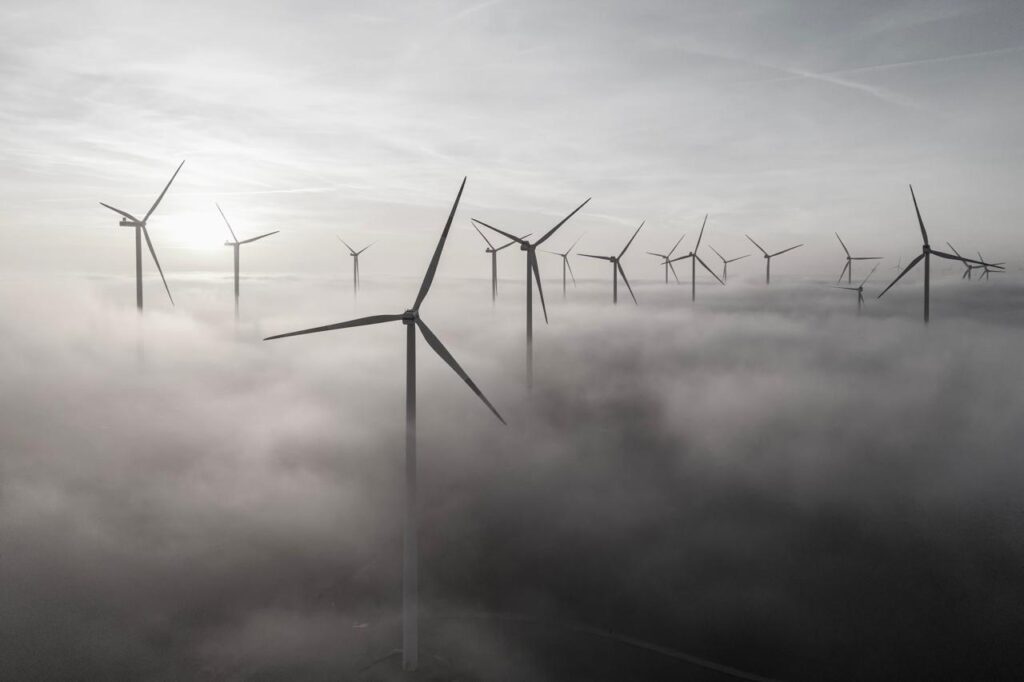
Solar and wind power expanded fast enough to meet all new global electricity demand during the first three quarters of 2025, according to UK-based energy think tank Ember. That pace puts global renewable capacity on track to grow 11% this year, marking another record.
Over the past three years, renewable capacity has increased by nearly 30% on average — bringing the world within reach of the goal set at COP28 in Dubai in 2023 to triple clean-energy capacity by 2030.
AI Delivers Climate Dividends
The explosive growth of artificial intelligence, and its massive appetite for power, is also fueling investment in green technologies. During the first three quarters of 2025, global clean-tech investment — dominated by funding for next-generation nuclear reactors, renewables and other solutions that support data-center power demand — surpassed total investment for all of 2024. That marked the sector’s first annual increase since its 2022 peak.
A key S&P index tracking clean energy outperformed most major equity benchmarks this year, as well as gold. The same enthusiasm has helped channel fresh capital into grid development, a critical backbone of the global energy transition.
Beyond energy supply, AI is enabling new climate solutions and speeding up scientific research, from sustainable materials to biodiversity protection.
Battery Costs Hit New Lows
Battery prices, long a bottleneck for electrification, continued their downward trajectory.
The average cost per kilowatt-hour fell 8% to a record low of $108 in 2025 and is expected to decline another 3% next year, according to BloombergNEF. Gains in manufacturing scale, cheaper chemical formulations and oversupply have offset higher prices for battery metals.
In the US, the Energy Information Administration expects 18.2 gigawatts of energy-storage capacity to come online in 2025 — a 77% increase from the previous year and nearly one-third of all new power capacity added nationwide.
International Breakthroughs
Even as President Donald Trump withdrew the US from the Paris Agreement and criticized green technologies, the global community scored several major climate victories.
Three years after its adoption, the High Seas Treaty finally secured enough ratifications to enter into force in January 2026. The agreement will enable protections for roughly 60% of the world’s oceans that lie outside national jurisdictions, setting rules for international waters for the first time.
Meanwhile, the International Court of Justice issued its first ruling in support of climate action, a decision expected to reshape how governments are held accountable. In July, the court said countries risk breaching international law if they fail to pursue efforts to keep global warming below the 1.5°C threshold agreed at the 2015 Paris climate conference.
The ruling provides a powerful new tool for NGOs and climate activists — and a reminder that, even amid political setbacks, momentum toward climate accountability continues to build.
Recommended Article
-
Climate Pressure Hits Banks
-
Trump Rattles Wind Industry
-
China breaks the Davos hush on climate
-
Trump’s latest blow to climate
-
Iran Protests Grow as Rial Plunges
-
EV Boom Slows as Subsidies Fade
-
‘Untouchable’ no longer
-
Blockbuster year
-
Another log on the fire
-
Hybrids pick up speed
-
It’s not all bad news
-
Under New Ownership
-
New front in the war on wind
-
Blown away
-
What the end of the F-150 means