
Another log on the fire
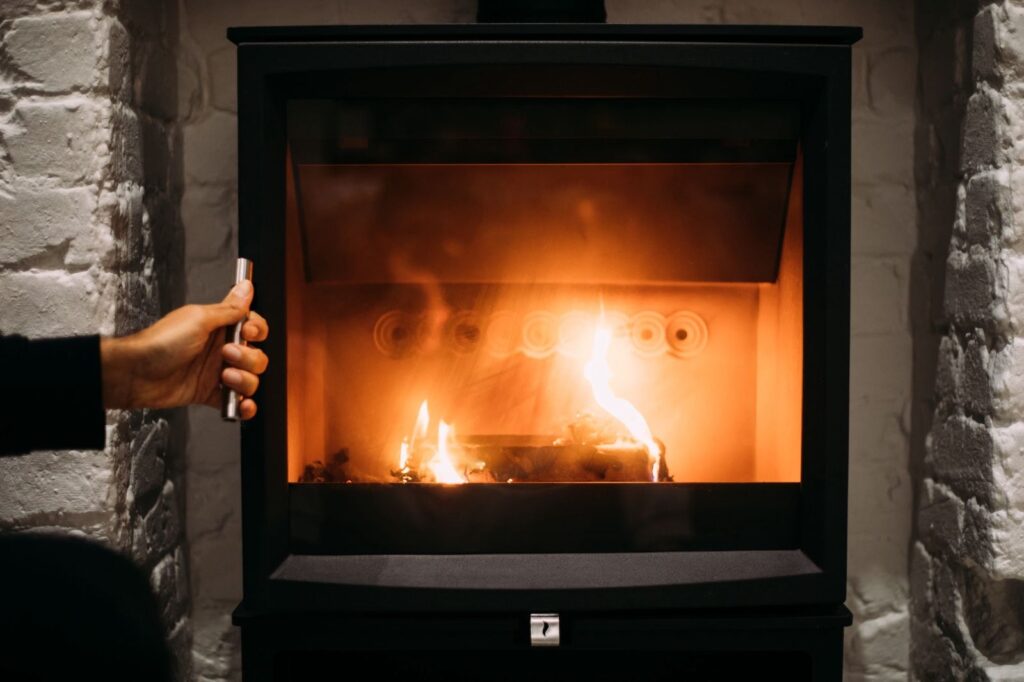
As Wood-Burning Stoves Boom in London, Clean Cozy Living Faces a Pollution Reckoning
On cold winter nights in London’s wealthier neighborhoods, the scent of wood smoke has become almost as familiar as the glow of holiday lights.
The bittersweet aroma drifts from wood-burning stoves — once a niche upgrade, now a hallmark of middle-class aspiration. Sleek, compact and neatly fitted into prewar fireplaces, the appliances have surged in popularity among affluent homeowners. Between 2009 and 2024, the number of wood-burning stoves installed in single-family homes in the UK rose by more than 25%, according to industry estimates.
For years, the appeal seemed straightforward. Compared with open fireplaces, modern stoves burn more efficiently, produce visible flames behind glass panels, and promise a sense of rustic comfort in an increasingly uncertain world. When fueled with sustainably sourced wood, they are often marketed as carbon neutral — a rare blend of indulgence and environmental virtue.
That narrative is now under strain.
London authorities are weighing tougher standards for new stoves as part of efforts to curb air pollution, while environmental campaigners have begun warning that wood burners release fine particulate matter into the capital’s already polluted winter air. Some of those particles, including PM2.5, are linked to respiratory illnesses and may carry carcinogenic risks.
The shift has caught many stove owners off guard. Appliances once seen as a double win — boosting home appeal while cutting carbon footprints — are increasingly grouped with far less palatable sources of pollution, from private jets to coal-fired power plants.
The backlash reflects a broader tension in climate-conscious urban living. Wood burners rose alongside a growing appetite for “cozy domesticity,” particularly during years marked by pandemics, energy shocks and geopolitical turmoil.
“Wood burners are one of those aspirational middle-class things now,” said Tabitha Tew, a director at north London fireplace retailer Amazing Grates. “It’s like limiting red meat or owning a low-shedding dog — a lifestyle signal as much as a practical choice.”
Technically, modern stoves comply with London’s long-standing smoke control regulations, introduced decades after the city banned coal burning. Their higher combustion efficiency keeps emissions within legal limits. What early adopters underestimated, however, is that legal does not necessarily mean harmless.
Wood burners still emit fine particles that can aggravate asthma and other respiratory conditions. The challenge for policymakers is compounded by a lack of definitive epidemiological evidence directly linking stove use to health outcomes — partly because stove owners tend to be wealthier and healthier than the general population.
“In the UK, people who burn wood are often more affluent, which makes it difficult to isolate the health effects of wood smoke,” said Laura Horsfall, a principal research fellow at University College London’s Institute of Health Informatics.
The debate has left London caught between competing priorities: preserving personal comfort and lifestyle choices while addressing chronic air-quality problems that disproportionately affect vulnerable populations.
As governments tighten pollution targets and rethink what qualifies as “green,” wood-burning stoves are emerging as an uncomfortable case study. In an era of climate anxiety, even the simplest pleasures — warmth, firelight, a sense of home — are being reassessed for their hidden costs.
Recommended Article
-
Climate Pressure Hits Banks
-
Trump Rattles Wind Industry
-
China breaks the Davos hush on climate
-
Trump’s latest blow to climate
-
Iran Protests Grow as Rial Plunges
-
EV Boom Slows as Subsidies Fade
-
‘Untouchable’ no longer
-
Blockbuster year
-
Another log on the fire
-
Hybrids pick up speed
-
It’s not all bad news
-
Under New Ownership
-
New front in the war on wind
-
Blown away
-
What the end of the F-150 means