
stdvolt

admin

It’s not all bad news

It’s not all bad news December 25, 2025 admin Climate Progress Accelerates in 2025 — Even as Emissions Keep Rising Greenhouse gas emissions driving global warming continued to climb in 2025, and national pledges to cut them remain far short of what is needed to avert severe climate disruption. Yet beneath the grim headlines, there are signs of meaningful progress. The world is decarbonizing faster than many expected a decade ago, with global investment in the clean-energy transition projected to hit a record $2.2 trillion in 2025, according to research by the London-based Energy and Climate Intelligence Unit. “Is it enough to keep us safe? No, clearly not,” said Gareth Redmond-King, head of international programs at ECIU. “But is it a remarkable improvement on the trajectory we were on? Absolutely.” This year has also seen renewable-energy capacity reach new highs, battery costs fall to record lows and unprecedented protections for the high seas move closer to reality. Artificial intelligence is accelerating climate research and improving weather forecasting, while economies and communities are gaining access to a broader set of tools to protect themselves — even as climate impacts become increasingly visible. Here are some of the investments, innovations and policy shifts that delivered tangible wins for the climate in 2025. Clean Energy Surges Global investment in green technologies continues to outpace spending on polluting industries. For every $1 invested in fossil-fuel projects, $2 now flows into clean energy, according to the ECIU. Among the world’s four largest emitters — China, the European Union, the US and India — that ratio rises to $2.60. Funding for renewable energy hit a fresh record in the first half of the year, climbing 10% from the same period in 2024 to $386 billion, based on the latest data from BloombergNEF. Solar and wind power expanded fast enough to meet all new global electricity demand during the first three quarters of 2025, according to UK-based energy think tank Ember. That pace puts global renewable capacity on track to grow 11% this year, marking another record. Over the past three years, renewable capacity has increased by nearly 30% on average — bringing the world within reach of the goal set at COP28 in Dubai in 2023 to triple clean-energy capacity by 2030. AI Delivers Climate Dividends The explosive growth of artificial intelligence, and its massive appetite for power, is also fueling investment in green technologies. During the first three quarters of 2025, global clean-tech investment — dominated by funding for next-generation nuclear reactors, renewables and other solutions that support data-center power demand — surpassed total investment for all of 2024. That marked the sector’s first annual increase since its 2022 peak. A key S&P index tracking clean energy outperformed most major equity benchmarks this year, as well as gold. The same enthusiasm has helped channel fresh capital into grid development, a critical backbone of the global energy transition. Beyond energy supply, AI is enabling new climate solutions and speeding up scientific research, from sustainable materials to biodiversity protection. Battery Costs Hit New Lows Battery prices, long a bottleneck for electrification, continued their downward trajectory. The average cost per kilowatt-hour fell 8% to a record low of $108 in 2025 and is expected to decline another 3% next year, according to BloombergNEF. Gains in manufacturing scale, cheaper chemical formulations and oversupply have offset higher prices for battery metals. In the US, the Energy Information Administration expects 18.2 gigawatts of energy-storage capacity to come online in 2025 — a 77% increase from the previous year and nearly one-third of all new power capacity added nationwide. International Breakthroughs Even as President Donald Trump withdrew the US from the Paris Agreement and criticized green technologies, the global community scored several major climate victories. Three years after its adoption, the High Seas Treaty finally secured enough ratifications to enter into force in January 2026. The agreement will enable protections for roughly 60% of the world’s oceans that lie outside national jurisdictions, setting rules for international waters for the first time. Meanwhile, the International Court of Justice issued its first ruling in support of climate action, a decision expected to reshape how governments are held accountable. In July, the court said countries risk breaching international law if they fail to pursue efforts to keep global warming below the 1.5°C threshold agreed at the 2015 Paris climate conference. The ruling provides a powerful new tool for NGOs and climate activists — and a reminder that, even amid political setbacks, momentum toward climate accountability continues to build. Recommended Article It’s not all bad news Under New Ownership New front in the war on wind Blown away What the end of the F-150 means walking away from coal The Rising Global Energy Demand

It’s not all bad news Read More »
Under New Ownership

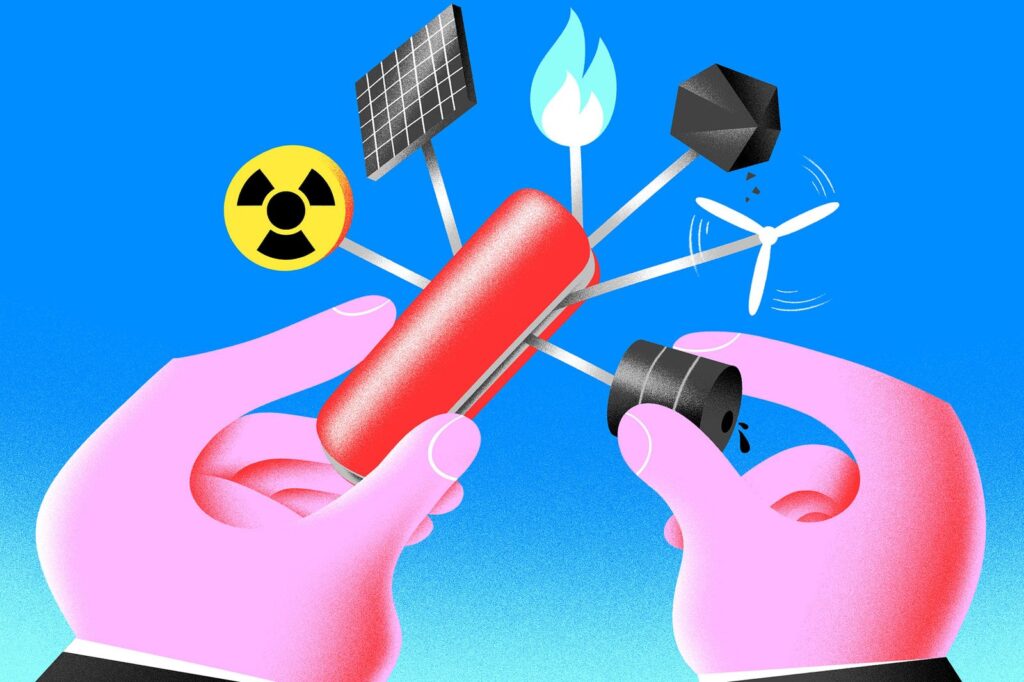
Under New Ownership December 24, 2025 admin US Energy Politics Are Flipping as Democrats Embrace ‘All-of-the-Above’ The governor was furious. Federal funding had just been pulled from an energy project that could have become a multibillion-dollar hub supplying fuel for ships, trucks and buses in one of America’s most industrialized states. “No matter what DC tries to dictate,” he snapped in response to the withdrawal of government support, “we’re going to keep pursuing an all-of-the-above strategy.” Calls for inclusive energy policies like this one were common during President Joe Biden’s term, when Republicans and oil-industry allies routinely accused Democrats of restricting fossil fuels while subsidizing low-carbon technologies. But the governor venting his anger earlier this year was California’s Gavin Newsom — a leading Democratic contender for the next presidential election and one of President Donald Trump’s most outspoken critics. Echoing arguments long used by Republicans, Newsom condemned Trump’s decision to withdraw funding from a West Coast clean-hydrogen hub as ideological and contrary to what he called “common sense.” The episode underscores how US energy politics have shifted sharply in 2025. This week alone, the Trump administration suspended permits for all five offshore wind projects currently under construction along the East Coast. At the same time, Newsom — long regarded as a staunch clean-energy advocate — has spent recent months promoting higher oil production, easing fossil-fuel regulations and scrapping plans to cap refinery profits. With electricity prices increasingly replacing gasoline prices as the dominant political flashpoint, several prominent Democrats are now moving quickly toward “all-of-the-above” energy policies just as Trump and his allies abandon that approach in favor of curbing renewable development. Virginia Governor-elect Abigail Spanberger campaigned on an all-of-the-above platform in a state positioning itself as a hub for energy-hungry data centers. Pennsylvania Governor Josh Shapiro has branded himself an “all-of-the-above energy governor” while leading a politically pivotal swing state. New York Governor Kathy Hochul’s recent backing of natural gas, framed as part of a push for “reliable and clean” power, represents another textbook example of the strategy. “There’s clearly political motivation behind this,” said Ben Cahill, director of energy markets and policy at the University of Texas at Austin. “Democrats recognize that affordability is going to be a major issue heading into the next election cycle.” The scramble toward the political center on energy has been enabled by Trump’s aggressive efforts to halt wind and solar projects at a time when US electricity demand is projected to surge 35% by 2040, driven largely by the explosive growth of artificial intelligence data centers. Nationwide, electricity prices rose 5.1% in the 12 months through September 2025 and are expected to climb further as utilities upgrade grids to withstand more frequent extreme weather linked to climate change. Trump’s campaign against renewable energy marks a sharp departure from more than two decades of Republican policy. Since the George W. Bush era, Republicans typically paired support for oil and gas with backing for wind and solar growth. That emphasis on energy abundance — rather than elimination — aligned with free-market principles and offered rhetorical cover for fossil-fuel interests in a world increasingly focused on climate change. Trump has instead recast the party’s stance as one of selective preference, backing certain energy sources while actively opposing others. In January, he declared a national energy emergency to invoke sweeping, Cold War-era authorities to accelerate pipeline construction, expand the power grid and rescue struggling coal-fired plants, while continuing to urge oil producers to “drill, drill, drill.” Those efforts are now increasingly intertwined with measures that directly hinder clean-energy development. And for the first time in years, it is the renewable-energy industry that finds itself on the defensive. Recommended Article Under New Ownership New front in the war on wind Blown away What the end of the F-150 means walking away from coal The Rising Global Energy Demand

Under New Ownership Read More »

New front in the war on wind

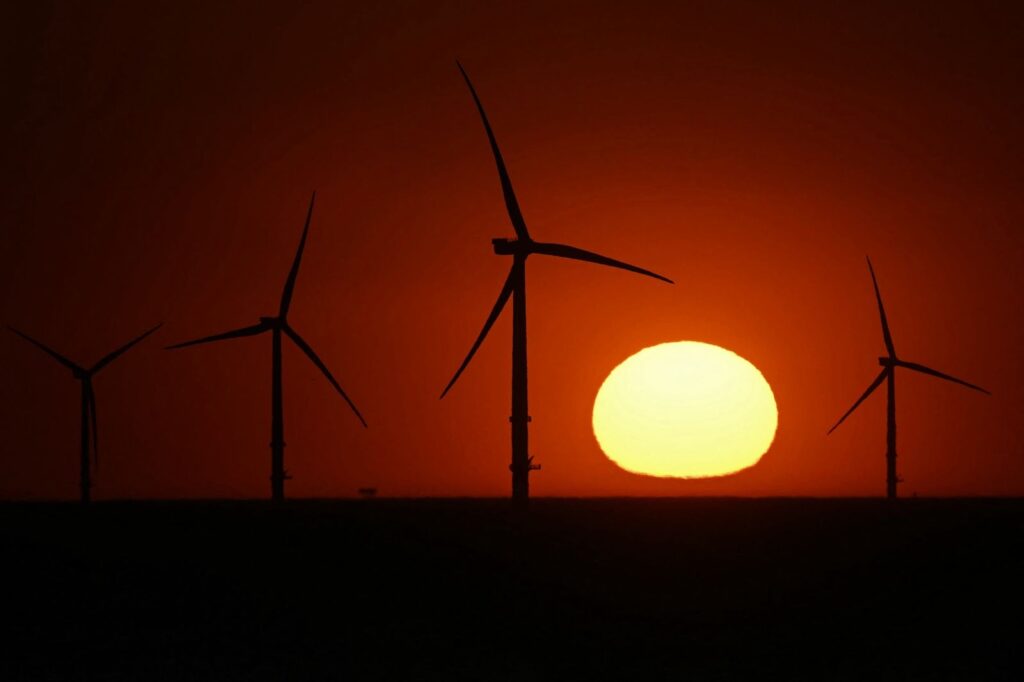
New front in the war on wind December 24, 2025 admin US Suspends Permits for Five East Coast Offshore Wind Projects on Security Concerns The US government has suspended permits for five offshore wind projects under construction along the East Coast, citing national security concerns and raising fresh doubts over a sector that has faced repeated opposition from the Trump administration. The Interior Department announced the move Monday, saying the large-scale turbines could interfere with radar systems. The suspension of operational permits will allow federal agencies to work with developers and state authorities to mitigate potential security risks, the department said in a statement. Shares of offshore wind companies fell following the announcement. Denmark’s Orsted A/S, a co-developer of the Revolution Wind project, slid as much as 15.8% in Copenhagen trading. Turbine maker Vestas Wind Systems A/S and Dominion Energy Inc., which is developing the Coastal Virginia Offshore Wind project, each declined as much as 5.8%. President Donald Trump has long opposed offshore wind and moved to restrict the industry just hours after taking office this year. Those actions have triggered multiple legal challenges, and a federal judge ruled earlier this month that the administration’s blanket ban on offshore wind projects was unlawful. Citing national security risks may offer a more legally defensible path to blocking turbine development in US waters. “These towers are massive,” Interior Secretary Doug Burgum said in an interview with Fox Business. “You can understand how structures of this size could create problems for radar systems.” National security concerns surrounding offshore wind projects predate the current administration. Under former President Joe Biden, the Defense Department pushed for modifications to lease terms along the West Coast to address similar radar and security issues. Projects affected by the permit suspension include Vineyard Wind 1 off the coast of Massachusetts, Revolution Wind near Rhode Island, Coastal Virginia Offshore Wind, as well as Empire Wind 1 and Sunrise Wind, both located off New York, according to the Interior Department. “The movement of large turbine blades and highly reflective towers creates radar interference known as ‘clutter,’” the agency said. Orsted, Dominion, Equinor ASA and Vineyard Wind did not immediately respond to requests for comment. Recommended Article Under New Ownership New front in the war on wind Blown away What the end of the F-150 means walking away from coal The Rising Global Energy Demand

New front in the war on wind Read More »

Blown away

Blown away December 24, 2025 admin India’s Energy Transition Faces a New Risk: Climate Volatility Few investments appear as compelling as India’s energy transition. Power demand is set to grow faster than in any other major market next year, while the country races to meet Prime Minister Narendra Modi’s 2030 target to add massive volumes of renewable capacity—roughly double today’s total. Yet climate change is injecting a new layer of risk, prompting investors and project developers to reassess assumptions that once underpinned wind and solar profitability. Rising temperatures are driving increasingly unpredictable weather patterns, threatening to disrupt power generation forecasts and long-term returns from large-scale renewable projects. Eversource Capital, one of India’s largest climate-focused asset managers, has shifted its priorities toward solar power after exiting investments in wind-heavy electricity producers, citing concerns over weaker wind speeds. “Wind projects have not delivered the performance we expected,” Chief Operating Officer Prasanna Desai said. Technological improvements have failed to fully offset the shortfall, and upgrades to larger turbines “have not produced the desired results,” he added. The concern extends well beyond India. As renewables account for a growing share of global power generation—rising to nearly 32% last year from about 22% a decade earlier, according to UK-based energy think tank Ember—climate-driven variability is emerging as a systemic risk. A Bloomberg Green analysis examined average wind speeds and solar radiation over rolling five-year periods between 2001 and September this year, using data from the Copernicus Climate Change Service. Compared with 30-year averages, wind speeds have declined most sharply since 2021 in India, western China and parts of Southeast Asia, including Indonesia, the Philippines and Malaysia. Solar radiation has also weakened over the same period across much of the Southern Hemisphere. “Climate change is effectively redistributing energy resources,” said Roberta Boscolo, head of climate and energy at the World Meteorological Organization. “A small change in wind speed translates into a significant loss of energy.” The shifting climate is pushing energy companies worldwide to factor weather risk more deeply into project planning and operations. US-listed ReNew Energy Global Plc has expanded its forecasting capabilities by acquiring analytics firm Regent Climate Connect Knowledge Solutions Pvt. in 2020 and investing in an energy diagnostics center near New Delhi. Billionaire Gautam Adani’s clean-energy arm, Adani Green Energy Ltd., has integrated artificial intelligence into day-ahead weather forecasting to mitigate operational risks. Energy Infrastructure Partners AG, which manages about €7.5 billion ($8.8 billion) in assets, has partnered with climate-risk specialists to develop tools that assess future wind-speed variability and temperature patterns for renewable assets, the firm said in its latest sustainability report. “The industry needs to think carefully about where these assets are located,” Boscolo said. “It’s no longer enough to look at historical data. You have to look forward.” Recommended Article Under New Ownership New front in the war on wind Blown away What the end of the F-150 means walking away from coal The Rising Global Energy Demand

Blown away Read More »

What the end of the F-150 means

What the end of the F-150 means December 20, 2025 admin Ford to Halt F-150 Lightning Production, Shifts Focus to Hybrid Trucks Electric pickup trucks are no longer a niche market, but the Ford F-150 Lightning may soon disappear from the segment. Ford Motor said on Monday that it will halt production of its electric pickup truck and shift its manufacturing plans toward hybrid-powered models. The F-150 Lightning was designed to persuade American drivers to embrace electric vehicles, but it ultimately failed to gain sufficient traction in the market. “It does not make sense to continue investing billions of dollars in a product that we know will not be profitable,” Ford Chief Executive Officer Jim Farley said in an interview with Bloomberg Television. “We had to make this choice.” Rather than reinventing the iconic F-150, the Lightning largely mirrored its gasoline-powered counterpart in both design and driving experience. Features such as the fold-away gear shifter remained intact, while electric-specific additions—most notably the large front trunk replacing the traditional engine compartment—were positioned as added conveniences rather than transformative changes. Sales of the electric F-150 did not collapse after an initial surge, unlike some competing models. Through the first three quarters of the year, only six electric vehicles sold in higher volumes than the Lightning in the United States, according to Cox Automotive, and none of them were full-size trucks or SUVs. Even so, Ford is expected to sell fewer electric F-150s this year than it did in 2024. One of the Lightning’s biggest challenges has been pricing. The model never fulfilled its promise of cost parity with gasoline-powered trucks. The $40,000 starting price advertised at launch was quickly withdrawn and replaced with a $55,000 figure—one that rarely appeared on dealer lots. In its first year on the market, the average transaction price—the actual price paid by buyers—was about $77,000, falling only slightly to $72,000 this year, according to Edmunds.com. By comparison, gasoline-powered F-150s sold for an average of $11,000 to $17,000 less. These persistently high prices reflect deeper struggles within Ford’s electric vehicle division, which posted losses of $5.1 billion last year. The company expects those losses to widen this year. Ford is not alone: other automakers have scaled back or canceled EV programs. General Motors recently took a $1.6 billion charge related to its EV operations, while Stellantis NV has scrapped plans for an electric Ram pickup. The rollback of EV incentives under the Trump administration is expected to further complicate electric vehicle sales, alongside proposed cuts to fuel efficiency standards. Farley warned that such policy changes could shrink the U.S. EV market by as much as 50%. Despite the setback, Farley emphasized that Ford is not abandoning electric vehicles altogether. Instead, the company plans to focus on lower-cost EV models that can compete with Chinese manufacturers. Ford is developing a new EV platform and has pledged to introduce an electric pickup priced around $30,000 without subsidies. Rivals such as General Motors have also reaffirmed their commitment to EV development. Still, Monday’s announcement underscores the risks of a rapid EV transition. Ford plans to convert a factory currently under construction—originally intended to produce electric trucks—into a facility that will manufacture gasoline-powered vehicles instead. Recommended Article Under New Ownership New front in the war on wind Blown away What the end of the F-150 means walking away from coal The Rising Global Energy Demand

What the end of the F-150 means Read More »

walking away from coal

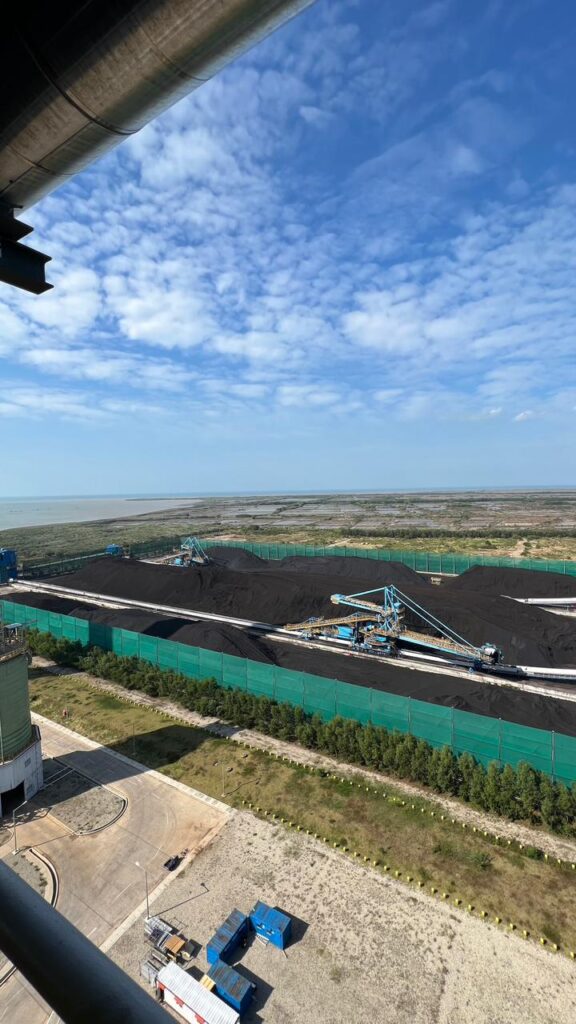
walking away from coal December 20, 2025 admin Global Coal Use Reaches Plateau, IEA Predicts Gradual Decline The International Energy Agency (IEA) has stated that global coal consumption has reached its peak and is expected to begin a gradual decline over the next five years, driven by the rapid expansion of renewable energy and increased use of liquefied natural gas (LNG). According to the IEA’s annual coal report published today, global coal demand is projected to rise slightly by 0.5% this year, reaching a record 8,845 million tonnes, before falling by around 3% by 2030. “We expect global coal demand to level off before edging down slightly by the end of the decade,” said Keisuke Sadamori, IEA Director of Energy Markets and Security. “However, there are still many uncertainties affecting the outlook for coal.” Coal remains the most polluting fossil fuel and is the world’s largest source of carbon dioxide emissions. Its continued use accelerates climate change, prompting countries such as the United Kingdom, France, and Spain to phase out or completely abandon coal-fired power generation. Despite this, coal continues to serve as a backbone of electricity generation in many parts of the world, with China alone consuming more coal than the rest of the world combined. The IEA noted that coal consumption has reached a “saturation point” as renewable energy deployment accelerates. According to energy think tank Ember, solar and wind power are expanding fast enough to meet all new global electricity demand. Ember analysts estimate that renewables including solar, wind, hydropower, and smaller sources such as geothermal will generate more electricity than coal for the first time in 2025. For years, analysts have struggled to pinpoint when coal consumption would peak, particularly as demand remains strong in China and India, even while advanced economies shut down coal mines and expand solar and wind capacity. The IEA cautioned that its five-year outlook is subject to “significant uncertainty that could materially affect projections.” Much of this uncertainty centers on China, which accounts for more than half of global coal consumption and production. The IEA forecasts a slight decline in Chinese coal demand over the next five years. However, it warned that slower renewable deployment or accelerated coal-to-gas conversion projects could turn this modest decline into a slight increase. These uncertainties reflect China’s evolving approach to climate-related pollution. There are indications that the country’s overall emissions have already peaked, and under the upcoming Five-Year Plan, the government aims to peak coal and oil use between 2026 and 2030. Nevertheless, subtle changes in recent official statements by the Communist Party suggest room for increased coal use toward the end of the decade. In India, strong monsoon seasons have reduced electricity demand while boosting hydropower generation, the IEA said. As a result, coal-fired power generation is expected to decline this year compared with 2024, interrupting the growth seen in recent years. Within the European Union, coal demand is expected to continue falling, but by only around 2% this year, compared with double-digit declines in 2023 and 2024. The slower decline reflects reduced hydropower and wind output, which led to higher coal-fired generation during the first half of the year. In the United States, where coal demand has fallen by an average of 6% per year over the past 15 years, the trend is expected to reverse in 2025. The IEA projects an 8% increase in coal use, although U.S. authorities anticipate an even larger rise. Higher natural gas prices and slower-than-expected coal plant closures—supported by federal policy—are the main drivers behind this shift. Even so, natural gas has overtaken coal to become the largest source of electricity generation in the U.S. this year, according to researchers at the World Resources Institute. Despite policy support in the U.S., persistently low prices in international markets continue to weaken the economics of coal mining, the IEA noted. Coal prices have stabilized after surging during the COVID-19 pandemic and the early years of Russia’s invasion of Ukraine. Mining margins are shrinking as prices move closer to production costs. This trend is expected to continue through 2030, as higher emissions costs further erode coal’s competitiveness relative to natural gas. Recommended Article Under New Ownership New front in the war on wind Blown away What the end of the F-150 means walking away from coal The Rising Global Energy Demand

walking away from coal Read More »

The Rising Global Energy Demand

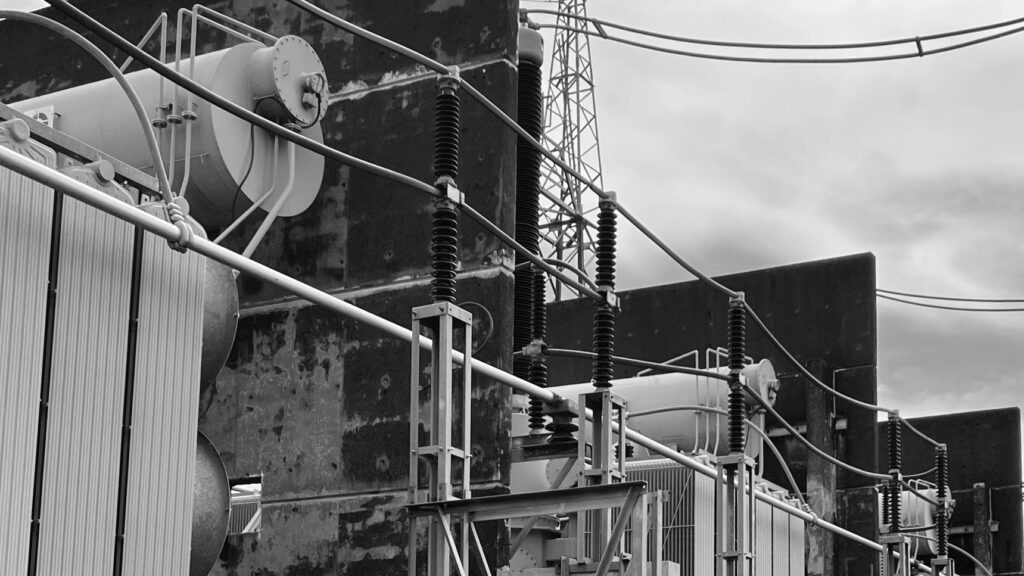
The Rising Global Energy Demand December 20, 2025 admin Empowering a Sustainable Future Through Reliable Transmission Infrastructure The world stands at a pivotal moment in its energy evolution. As industrialization, urban development, and digital transformation continue to accelerate, the global demand for energy is growing at an unprecedented rate. Electricity consumption is projected to surge across all regions, driven by the expansion of manufacturing, the electrification of transportation, and the increasing reliance on digital infrastructure and smart technologies. Emerging economies particularly across Asia and Africa are becoming the new frontiers of this energy transformation. Millions of households are gaining access to electricity for the first time, industries are scaling up production capacity, and urban centers are expanding rapidly to accommodate a growing population. This shift is reshaping global energy dynamics and redefining how nations plan, distribute, and secure their energy supplies. According to the International Energy Agency (IEA), global electricity demand is expected to rise by more than 25% by 2040. This exponential increase represents both an opportunity and a challenge. It opens the door for innovation in renewable power generation, grid modernization, and smart transmission technologies but also calls for greater responsibility to ensure that energy systems remain efficient, sustainable, and resilient against environmental and geopolitical pressures. The expansion of power transmission infrastructure is at the heart of this transformation. Without efficient and reliable transmission networks, energy cannot reach industries, cities, or communities that need it most. It is through these invisible backbones high-voltage lines, substations, and protection systems that modern society functions and progresses. At PT Standard Volt International, we believe that reliable transmission networks are the foundation of sustainable growth. Our mission is to deliver high-quality power transmission materials that meet international standards, enabling energy to flow safely and efficiently across nations. We see energy not merely as a commodity, but as a catalyst for social and economic development. Every project we support from substation modernization to transmission line upgrades contributes to a larger purpose: to empower communities, drive industrial growth, and promote a cleaner, more equitable global energy future. As the world transitions toward renewable sources and smarter grids, our commitment remains clear to innovate responsibly, to build with integrity, and to support the global pursuit of sustainable energy access for all. Recommended Article Under New Ownership New front in the war on wind Blown away What the end of the F-150 means walking away from coal The Rising Global Energy Demand

The Rising Global Energy Demand Read More »